
Lights Dimming When the Compressor Kicks On? What It Tells You
Quick Answer: A quick, mild dim when your air conditioner compressor kicks on is usually just inrush current, the brief surge a motor pulls the instant it starts, tugging voltage down for a fraction of a second before it bounces back. That kind of blink is common and rarely a hazard on its own. What matters is degree and pattern. A dip that's deep, drags on for a second or more, shows up on lights far from the AC circuit, or has been getting worse over time usually points to something real: wiring sized too small for the load, a panel running short on capacity, or a loose connection somewhere between the meter and the outlet. Those are problems a licensed electrician can trace and fix, and worth checking before another hot Southeast Texas summer pushes your system harder.
You're sitting in the living room, the AC cycles on in the next room, and every lamp in the house sags for a split second. Maybe you barely catch it. Maybe it's enough that you look up from what you're doing. Either way, it happens every single time the compressor starts, and now you're wondering if that's just how houses work or if something under your walls needs attention.
Fair question. A compressor pulling a jolt of current the moment it fires up is normal electrical behavior. What isn't automatically normal is how your house handles that jolt. Whether it shrugs it off or struggles with it says a lot about the condition of your wiring, your panel, and the connections holding the whole system together. Here's how to read what your lights are telling you.
Why an AC Compressor Makes the Lights Move at All
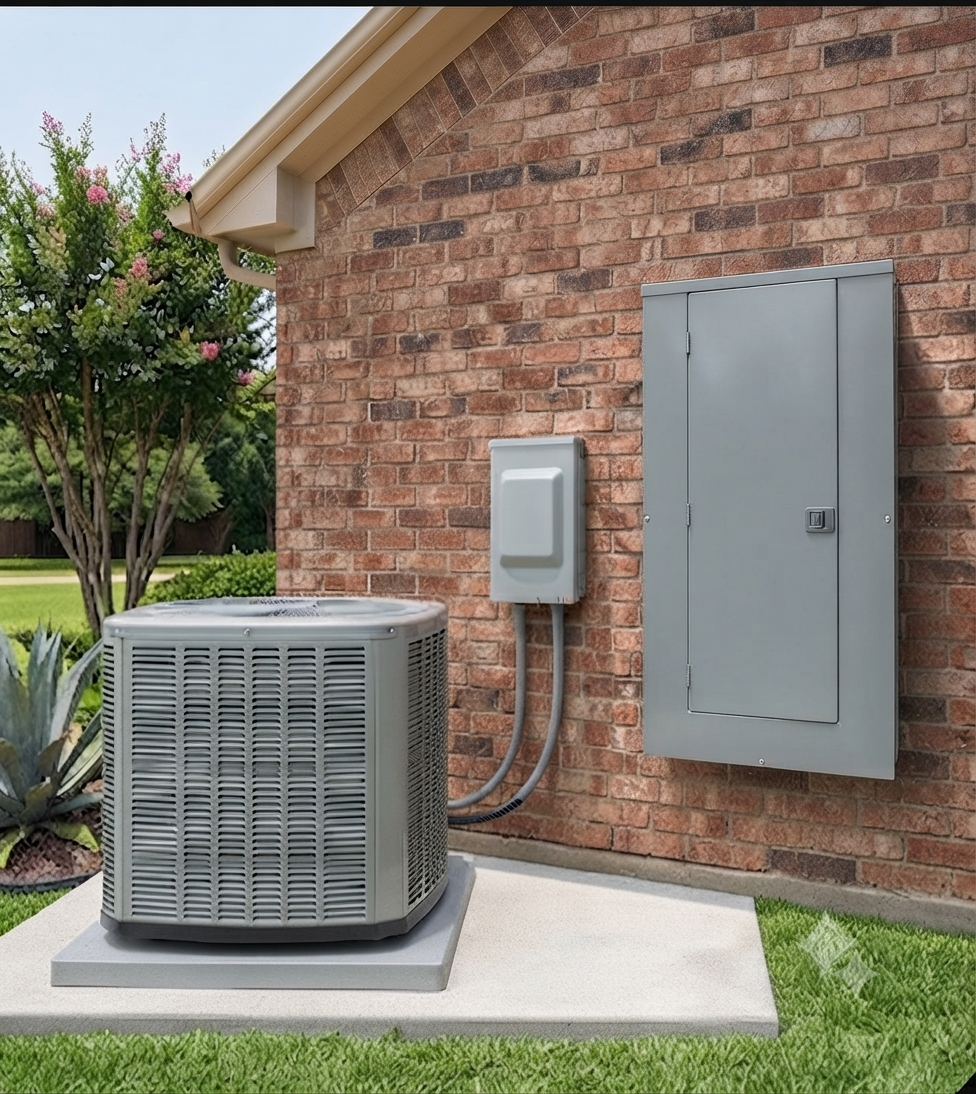
An air conditioner compressor is a motor, and motors don't draw power evenly. At the instant a compressor starts, it needs several times more current than it does once running, because the motor has to overcome the resistance of a standing start and build up magnetic field before it settles into its steady draw. That burst is called inrush current, or locked-rotor current in an electrician's terms. Depending on the unit, it can run anywhere from three to six times the compressor's normal running amperage. It only lasts a moment, usually well under a second, but that's long enough to pull down the voltage on the circuit feeding it.
Voltage and current share the same wire, and current doesn't travel for free. Every foot of copper between your panel and the compressor carries some resistance, and pushing a heavy surge of current through that resistance drops voltage for as long as the surge lasts. Your compressor and your lighting circuits almost always share a panel. That's why the dip shows up everywhere on the system for a beat, not just on the AC circuit itself. It's real physics doing what physics does, not your imagination, and a small version of it is baked into how residential electrical systems work.
When a Dip Is Normal and When It's a Red Flag
A brief, shallow dim that recovers almost instantly and stays consistent cycle after cycle is generally nothing to worry about. Most homes show some version of it, especially on the panel section closest to the outdoor unit, and it doesn't mean your wiring is failing. Think of it like a car's headlights dimming slightly when the engine cranks. The system asked for a burst of power, got it, and moved on.
What separates a normal dip from a warning sign comes down to duration, depth, and trend. A light that visibly dims for a second or longer, rather than a flicker you'd miss if you blinked, is pulling more voltage drop than a healthy circuit should produce. Lights in rooms far from the AC unit dimming right along with the ones nearby suggests the problem isn't confined to one branch circuit but is hitting the whole panel or service. And if the dimming has grown more noticeable over the past several months without any change to your AC equipment, that trend usually means a connection somewhere is degrading rather than staying steady.
Warning: Buzzing, crackling, a burning odor near your panel, or a breaker that feels warm to the touch aren't dimming-lights problems anymore. They're fire-risk problems. Shut off the affected circuit if you can do so safely, and get a licensed electrician out before running the AC on that circuit again.
What's Actually Behind Stubborn Dimming
When the dip is more than cosmetic, a handful of culprits show up again and again in older and mid-age Southeast Texas homes.
Undersized wiring tops the list. If the circuit feeding your AC condenser, or the feeder supplying the subpanel it runs from, was sized for a smaller unit than what's installed today, every start draws more current through a conductor that was never rated to carry it comfortably. The result: a bigger voltage drop, every single cycle.
Panel capacity is a close second. Homes built decades ago were wired for a fraction of the load a modern household carries. Add central air, an electric range, a couple of window units from before the whole-house system went in, and a garage full of tools, and a panel that was adequate years ago can be running right at its ceiling today. When total demand crowds that ceiling, any big momentary draw, like a compressor starting, produces a deeper sag than it would on a panel with room to spare.
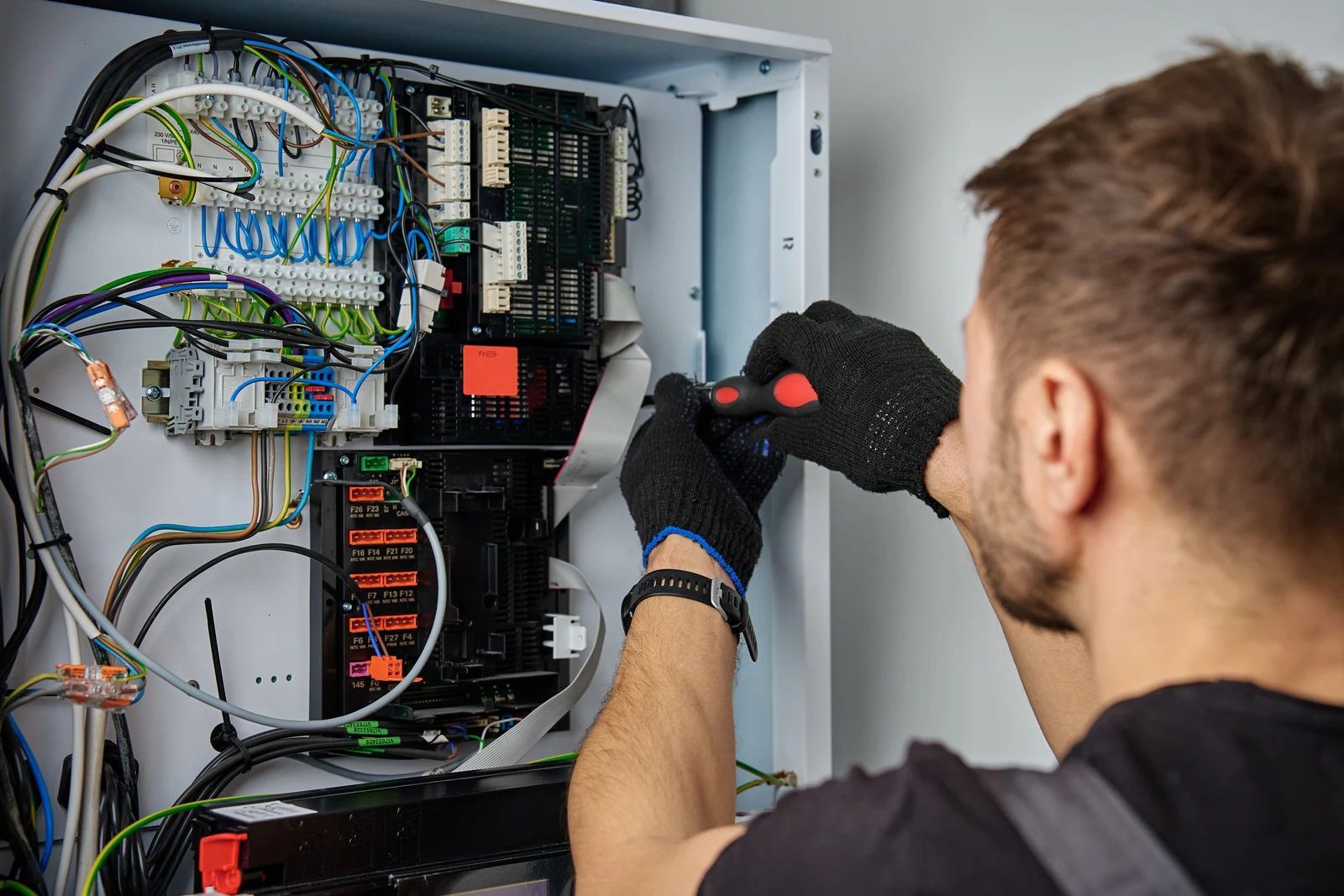
Loose or corroded connections worry electricians the most, because they get worse quietly. A connection at the panel, the meter base, or the outdoor disconnect that has loosened over time develops resistance it didn't have when it was installed. Resistance turns electrical energy into heat, so a loose connection under the load of a compressor starting can both cause a bigger voltage dip and generate heat you can't see. This is exactly what a thermal inspection, or a simple torque check on your panel connections, catches before it turns into something worse.
Distance matters too. A long wire run has more resistance than a short one, so a condenser sitting far from the panel needs wire sized up to compensate. A circuit correctly sized for a short run but installed over a longer distance, or never recalculated when the AC got relocated during a remodel, will show a bigger sag than the same equipment would on a shorter path.
Tip: Want a rough read on how serious the dip is before an electrician arrives? Watch a lamp on a circuit nowhere near the AC unit. If it dims noticeably too, the issue is likely at the panel or service level rather than confined to one branch circuit, which helps your electrician narrow down where to start looking.
Electrical Problem or HVAC Problem? How to Tell
Dimming lights sit right at the intersection of two trades, so it helps to know which one you're dealing with before you call anyone. If the compressor itself is struggling, a failing start capacitor is a common cause. A capacitor losing its charge can no longer give the motor the boost it needs to start smoothly, so the motor works harder and pulls more current for a longer stretch, which shows up as a bigger and longer dim than usual. That's HVAC territory, and a technician can test the capacitor directly.
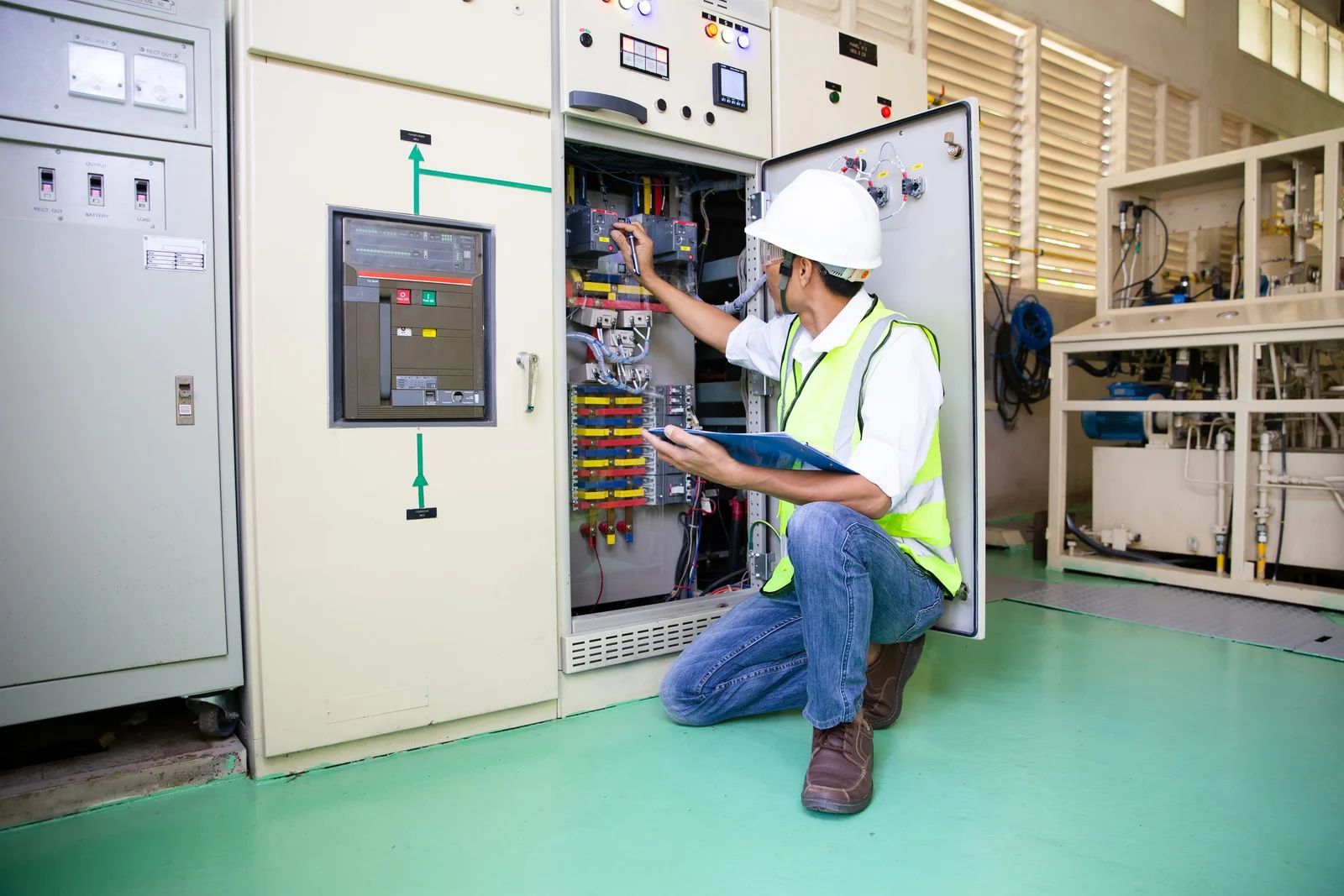
Everything upstream of the compressor is electrical territory: the wiring, the panel, the connections, the voltage actually being delivered to the unit. If your HVAC technician checks the equipment and it tests fine, or the dimming happens with other large appliances too and not just the AC, the issue is almost certainly on the electrical side rather than inside the condenser. A licensed electrician can measure voltage drop directly at the panel and at the disconnect while the compressor cycles, which settles the question with certainty instead of a guess.
What an Electrical Inspection Actually Checks
A proper diagnosis doesn't stop at watching the lights dim and guessing. An electrician measures voltage at the panel before, during, and after the compressor starts to quantify the actual drop, rather than eyeballing how bad it looks. From there, the inspection typically includes checking the wire gauge feeding the AC circuit against the unit's actual load, verifying every connection at the panel and disconnect is torqued to spec, looking for heat damage or discoloration at lugs and breakers, and confirming the panel has room left for the loads it's carrying. That combination tells you whether the fix is as simple as re-torquing a connection or as involved as upgrading a circuit or the panel itself.
I've seen both ends of that range on the same street: one house needing nothing more than a fifteen-minute connection tightening, the house next door needing a full panel upgrade because three decades of add-ons finally caught up with it.
Frequently Asked Questions
Is it dangerous if my lights dim every time the AC turns on?
A brief, mild dim is usually harmless. Concern increases when dimming lasts longer, affects unrelated circuits, or accompanies buzzing, panel warmth, or burning odors. These symptoms may indicate loose wiring or connections generating dangerous heat.
Why do only some of my lights dim and not others?
When only certain lights dim, voltage drop may be limited to a specific circuit or panel section. Whole-house dimming often suggests a broader issue involving the main panel, electrical service, connections, or available system capacity.
Could my AC unit itself be causing this instead of my house wiring?
Yes. A weakening start capacitor can force the compressor motor to draw additional current for longer during startup, causing noticeable dimming. If the symptom becomes significant, both the AC equipment and electrical system deserve inspection.
Has my house always had a small dip, or did I just start noticing it?
Either is possible. A small, unchanged dip may simply reflect normal compressor inrush current. Dimming that recently appeared or gradually worsened can indicate a loosening electrical connection, increased household demand, or another developing electrical problem.
Will upgrading my electrical panel fix the dimming?
It can if insufficient panel capacity causes the voltage drop. However, an undersized circuit, loose connection, or compressor problem requires a different repair. Proper diagnosis identifies the source before determining whether a panel upgrade helps.
What Your Dimming Lights May Be Revealing
A slight, momentary dim when the AC compressor starts can be a normal result of inrush current, especially when the lights recover immediately and the pattern never changes. Deeper or longer dimming deserves more attention because it may reflect undersized wiring, excessive voltage drop, limited panel capacity, or a deteriorating connection. Understanding the difference prevents a harmless electrical characteristic from causing unnecessary concern while making it easier to recognize changes that indicate the system is no longer handling compressor startup normally.
With 40
years of experience, A&A Electric Company Of Beaumont
understands how electrical systems in Beaumont, TX homes respond to demanding air conditioning loads and the region’s long cooling season. Looking at the duration, severity, and location of the dimming can reveal whether the cause is ordinary compressor startup or an electrical condition developing elsewhere. When those patterns are considered alongside wiring condition, panel capacity, and connection integrity, they provide a clearer picture of how reliably the
home’s electrical system is managing everyday demand.